Root Canal Therapy in Alpharetta, GA

A number of treatments fall into the area of endodontics. The most common procedure is root canal therapy. A longstanding dental treatment, root canal therapy has been misrepresented for decades. Most people feel at least a little apprehensive about receiving this treatment. Dr. Hepler and his team understand the stress that is involved with tooth pain. Root canal therapy need not add to that stress. Instead, our gentle care focuses on removing infection that is causing pain. The entire process can be painless. Remember a root canal is correcting the problem causing the pain and discomfort.
Teeth: more than meets the eye
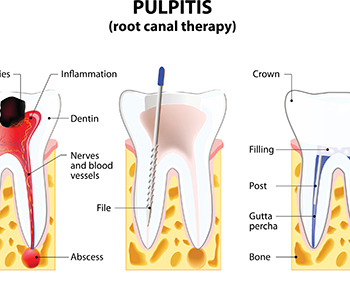
Looking at a tooth, we may envision a solid structure of enamel. What we see, however, is just an outer shell, a protective layer that lies over softer tooth material. Beneath the enamel is dentin, which is much softer in comparison. Dentin is the predominant material in each tooth. In this structure are thousands of tiny tubules responsible for the transmission of sensations, such as heat and cold. At a tooth’s center are pulp tissue, vessels, connective tissues, and the root nerve.
Identifying problems may be easier than you think
Our teeth are actually very good at communicating their overall state of health. If sensitivity to hot or cold temperatures or to sweets occurs, you can be certain that there is a problem lurking somewhere in the teeth or gums. The earlier care for slight discomfort can be scheduled, the less likely it is you will require root canal therapy at all. When infection is not treated, the tooth will eventually die and may be lost.
Pain and infection can be eliminated with root canal therapy
The perception that most people have about root canal therapy is that the procedure is very uncomfortable. The opposite is actually true. When you visit the dentist for a filling, you don’t expect it to be painful. Root canal therapy is no different!
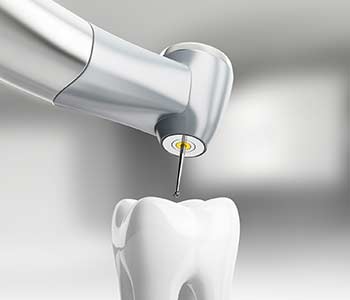
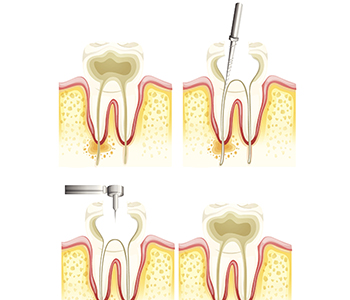
Before beginning treatment, our team administers local anesthetic, just as we would for a filling. Once the area is numb, damaged tooth material is removed, also just like a filling. An opening is then made into the center of the numbed tooth. Using specialized instruments, Dr. Hepler removes all infections. The emptied root canal is cleaned and sterilized before inert material is inserted to prevent bacteria from invading.
Root canal therapy is often followed by the placement of a custom-made dental crown. This restoration will cover the weakened tooth structure by buffering the force of biting and chewing. With good preventive care, the restoration will remain strong and attractive for many years.
Frequently Asked Question About Root Canal Therapy
Do I need a root canal even if my tooth doesn’t hurt?
Surprisingly, your dentist may recommend a root canal even if the pain has subsided. While pain is the telltale sign that you need a root canal, it’s not usually the only sign. Other symptoms include tooth discoloration, swelling, and a pimple-like bump near the affected tooth.
Aside from that, your infected tooth may become asymptomatic if the infection progresses and kills the nerve inside it. At this point, your tooth no longer registers pain signals, but the infection is still active. Even without symptoms, the infection can often be seen on X-rays. Your dentist will recommend a root canal to remove the infection and save the tooth. Ignoring the problem can lead to bigger problems later.
Do I need a dental crown after a root canal?
Whether you need a crown depends on the specific tooth and its condition. A root canal resolves the infection but leaves your tooth significantly weakened. A crown protects and strengthens the treated tooth, restoring its function and appearance. Without a crown, the tooth may be more likely to crack over time.
Back teeth (molars and premolars) often need dental crowns, but front teeth may only need a filling. Your dentist will help determine the most suitable restoration.
How long does a root canal take?
We can complete most procedures within 45-60 minutes, but complex cases may take up to 90 minutes. Most root canals require only a single visit, while others may need a second appointment. We’ll guide you on what to expect during your consultation.
Does a root canal hurt?
Don’t trust what you have heard from the media or pop culture. Modern root canals are very comfortable. Your dentist combines effective anesthetics with gentle techniques to ensure a comfortable procedure. You may experience pressure, but not pain. If you are an anxious patient, let us know. We offer oral conscious sedation, which calms your nerves for an anxiety-free treatment.
Root canal vs tooth extraction: Which is better?
Saving your natural tooth is usually the best option. A root canal saves your tooth, helping keep your bite stable and avoiding the need for costly replacement options. Extraction is always the best choice when we can’t save your tooth. If a tooth is removed, we recommend replacing it with an implant or bridge to maintain your functionality and appearance.
How much is root canal treatment in Alpharetta, GA?
The cost depends on several factors, including the location of the tooth, the complexity of treatment, and the type of restoration. The average cost is between $1,000 and $3,000, but the best way to get an exact cost is to schedule an appointment with your Alpharetta root canal dentist.
Does insurance help with the cost?
We work with multiple insurance providers, so we don’t have a one-size-fits-all answer on whether your insurance covers your treatment. From our experience, coverage varies by plan. That’s why we insist on checking with your provider to determine the applicable benefits.
Can a root canal fail?
Root canals are one of the most predictable procedures, with an over 90% success rate. However, as with any dental procedure, they can fail. Your root canal can fail due to new infection, delayed restoration, or hidden canals. If it occurs, a do-over with a retreatment or root-end resection (apicoectomy) can give your tooth a second chance.
Where can I get expert root canal services in Alpharetta, GA?
A severe infection or damage doesn’t always mean your tooth should be pulled out. Call (866) 687-1992 and discover how Atlanta Center for Dental Health can save your tooth with advanced root canal therapy.